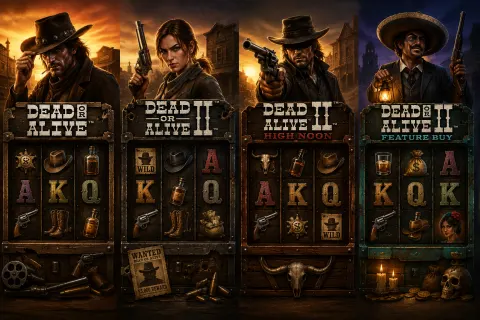

Slots are appealing because they pay on an unpredictable schedule, react to every spin with sound and animation, and are fast and simple to play. Psychologists call the payout pattern a variable ratio schedule: rewards come after an unknown number of tries, which is the pattern that keeps people repeating an action longest. Near misses, small wins dressed up with celebration sounds, and choices that feel like control add to the pull.
Knowing how these design hooks work makes it easier to enjoy slots on your own terms. This guide explains each one, with a worked example in shillings, and what you can do to keep control.
Unpredictable rewards: the variable ratio schedule
In behavioural psychology, a reward that comes after an unpredictable number of attempts produces the most persistent behaviour. Slots work this way by design: any spin might pay, so there is never a natural point at which the next spin looks pointless.
| Reward pattern | How it works | Typical effect |
|---|---|---|
| Fixed ratio | Reward after a set number of tries | Predictable; people pause after each reward |
| Variable ratio | Reward after an unpredictable number of tries | Steady, persistent play (slots) |
| Fixed interval | Reward after a set time | Activity bunches up near the expected time |
| Variable interval | Reward after an unpredictable time | Moderate, steady activity |
Volatility sets how uneven the schedule feels. A low-volatility slot pays small amounts often; a high-volatility slot can go a long time without a meaningful win and then pay a large one. In our catalogue, 101 of the 876 slots with a volatility rating are low and 293 high or very high. Both keep the average cost fixed by the RTP; only the rhythm differs.
Near misses and wins that are really losses
Near misses
A near miss is a result that looks close to a big win: two bonus symbols and a third just above the window, or a jackpot symbol one position off. Research on gambling has found that near misses tend to feel like "almost winning" and can encourage further play, even though they pay nothing and say nothing about the next spin. Each spin is independent; a near miss does not mean a win is coming.
Losses disguised as wins
On multi-line slots, many spins pay back less than you staked but still play a win sound and animation. Researchers call these losses disguised as wins. Here is how one looks in shillings:
| Amount | |
|---|---|
| Stake: 20 lines at KSh 1 each | KSh 20 |
| Win shown on screen, with sound and animation | KSh 8 |
| Real result of the spin | KSh 12 lost |
Lines and ways make these results common. In our catalogue, 527 of the 823 slots with a recorded payline count (64%) have 20 or more lines or ways to win. The more lines, the more often a spin returns part of the stake with a celebration. Judge a session by your balance, not by how many wins you saw.
How sound design shapes the experience
Sound is one of the strongest hooks in a slot. Studios script a cue for each event: a click or rising tone when the reels start, ticks as each reel stops, a building sound when bonus symbols land, a chord or jingle for a win and a fanfare for a feature. Losing spins are mostly quiet. The result is that wins are heard and losses are not.
| Slot event | Typical sound cue | What it does |
|---|---|---|
| Spin start | Click or rising tone | Marks a new round |
| Reels stopping | Ticks in sequence | Holds attention to the last reel |
| Two bonus symbols landed | Building tension, slower last reel | Raises anticipation |
| Any win, even below the stake | Jingle, coin sounds | Signals success |
| Bonus triggered | Fanfare, new music | Marks the high point of the session |
Studies of slot sounds have found that winning sounds make players overestimate how often they win, and that playing with the sound off makes the true pattern easier to see. Many slots also have their own soundtrack; branded music slots use licensed recordings (see branded slots).
Turning the sound down or off changes nothing about the RTP or any result, so it is a free way to see a session more clearly. The volume or sound setting is usually in the game's menu.
Choices that feel like control
Slots give you decisions: stake size, number of lines, when to press spin, whether to stop the reels early, which bonus option to pick. Psychologists call the feeling these create the illusion of control: when you take part in a chance event, it can feel as if your choices influence it. On a slot they do not. The random number generator settles the result, and stopping the reels early only skips the animation.
Choices that do matter are the ones that set your cost: the slot's RTP, your stake and how many spins you play. At 96% RTP, KSh 100 spins cost KSh 4 each on average, KSh 10 spins cost KSh 0.40.
Speed, simplicity and visual design
A spin takes a few seconds and needs no skill or learning, which makes slots easy to start and easy to continue. Bright symbols, smooth animation and bonus rounds that change the screen layout break up the routine, and sequels and seasonal editions keep the lobby fresh (see online slot trends). Fast play also means more money staked per hour: 600 spins an hour at KSh 20 is KSh 12,000 staked and KSh 480 lost on average at 96% RTP.
How to enjoy slots and stay in control
- Set a budget in KSh before you start, and treat it as the price of the entertainment. Stop when it is gone.
- Set a time limit with a phone alarm; slots have no natural end point.
- Use deposit limits in your casino account, and keep mobile money deposits to what you planned.
- Turn off autoplay and turbo, and try a session with the sound off.
- Never chase losses. A run of losses does not make a win more likely; the slot myths guide explains why.
If slots stop feeling like entertainment, see responsible gaming for tools such as limits and self-exclusion, and gambling addiction for signs to watch and where to get help. Gambling is for adults 18 and over.